
Why we built a timer without a screen, without an app, without power
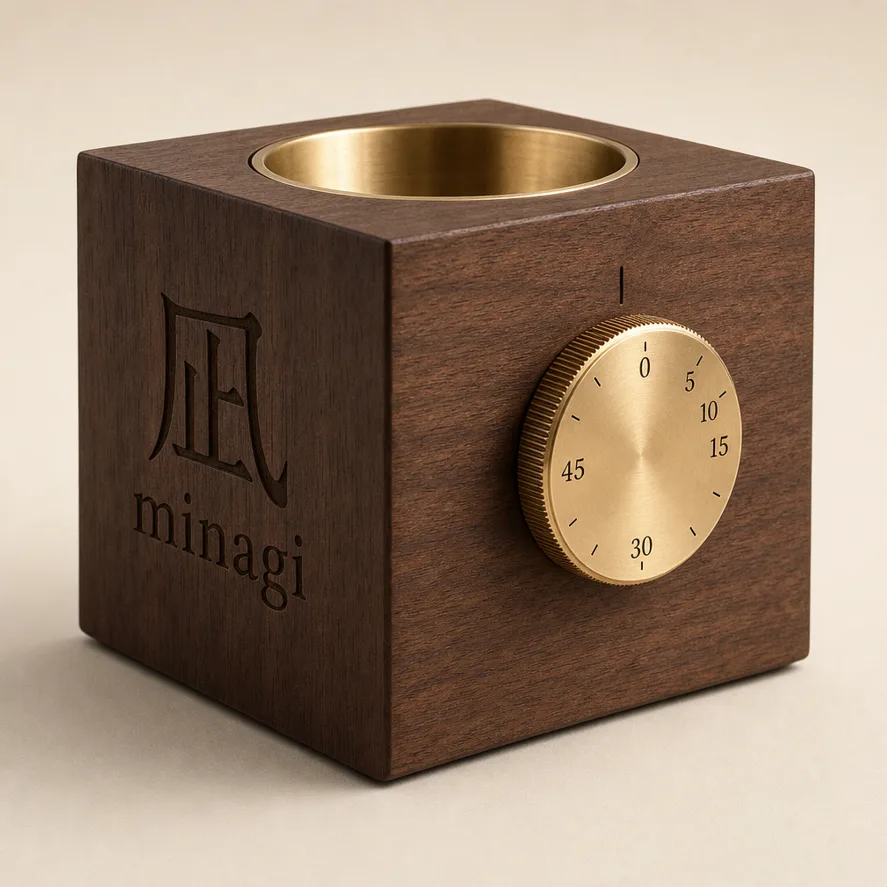
Ask the question out loud and it sounds almost strange. Why build a separate object for something your phone already does? Every smartphone contains a timer. Free, always at hand, accurate to the second. We built one anyway. Of walnut and brass, mechanical, without a screen and without a plug. This episode explains why that apparent detour turns out to be the shortest route to attention.
The skeptic is half right
The skeptical reader is thinking: pure nostalgia, an expensive trinket for lovers of old things. That objection deserves an honest answer. Yes, your phone counts the minutes just as well. And that's exactly where the problem lies. The previous episodes showed the evidence: the mere presence of your phone taps your thinking power, even with the screen off. Start a focus session on that device, and you open the one thing designed to interrupt that very session. The measuring tool is also the biggest source of distraction.
Why separation makes the difference
Attention needs a place of its own, separate from the distraction. That's the thinking behind a timer without a screen. You wind it, and the session begins with a physical gesture instead of a tap on glass. The inbox stays closed, one swipe away. The notifications wait outside your field of view. The action itself marks the boundary: this begins now, everything else waits. Research shows that a clear start like this determines the quality of the block that follows.
Identity choices instead of features
Walnut instead of plastic. Brass instead of a speaker. A tuned singing bowl instead of a beep. Repairable instead of disposable. These traits look like a list of features, but they're really something else: choices about how attention feels. A warm material on your desk invites touch and use. A soft tone closes a session without racing your heart. The absence of a screen simply removes the source of the unease.
For those who make things, where attention sits matters
The creative professional knows the state where the work carries itself. Hours feel like minutes, the work builds effortlessly. That state tolerates exactly one thing badly: interruption. A single notification breaks the build-up, and everything starts over. An object that keeps time without asking for attention itself protects precisely that precious flow. It guards the boundary, then fades into the background.
Edition 01
We call the first run Edition 01. Five hundred pieces, each with its own serial number. An object that gives attention a fixed place on your desk or table, apart from any screen. Whoever winds it chooses this one moment, deliberately.
A timer without a screen, without an app and without power looks like a step backward. It turns out to be a step forward. Back to undivided attention, with all the calm and clarity that comes with it. The shortest path to focus runs through an object that never asks for your attention itself.
Full attention. No distraction.
Geert-Jan Smits & Jurriën Kerstholt
This was the final episode in our series on the power of attention. More about Edition 01 at mi-nagi.com.
← Back to Magazine